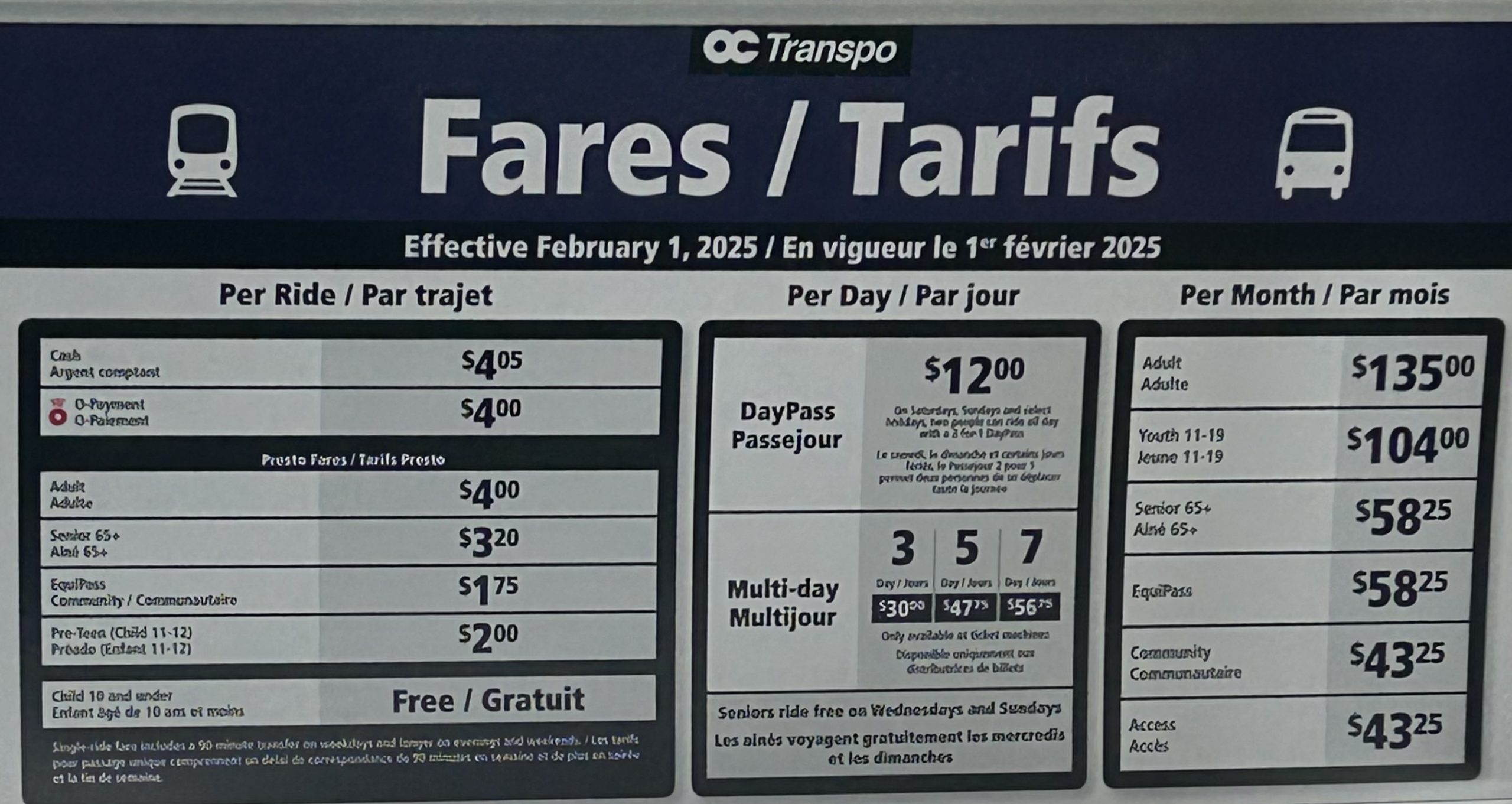
Calgary and Ottawa have some of the highest public transportation fares in the country, with them both crossing the $4 threshold in the past year. Calgary Transit announced the increase to $4 for a 90-minute pass in Jan. 2026, and OC Transpo had implemented it a year prior, and bumped the fare up at the beginning of the year to $4.15.
While many don’t choose to ride exclusively in 90-minute increments, it’s rare for the single fare to solely rise without an increase on alternative measures of time.
How do transit agencies decide on fare prices?
There are many factors that go into the decision to increase fare prices, though the final decision usually goes to councils and committees within the region’s transportation sector when they look over the year’s budget. On Nov. 24, 2025, Ottawa’s Transit Committee was going through actions they were planning to implement in the new year, such as free fare for youth under 18 on the weekends and increasing transfer times to 105 minutes from 3:00 p.m. – 6:00 p.m. on weekdays. The committee is tasked with finding ways to successfully implement these changes that benefit the riders and how much they’d cost per year, which leads to fare increases.
While it can be frustrating to see that the fare rise year over year, it’s typically done to not shock riders by a sudden, sharp increase. “We know that increases can have an impact on customers,” said Amanda Bradley, Transit Relations for Calgary Transit. “So we generally make small increases each year to cover costs, rather than larger, less frequent ones.”
What do fare prices go to?
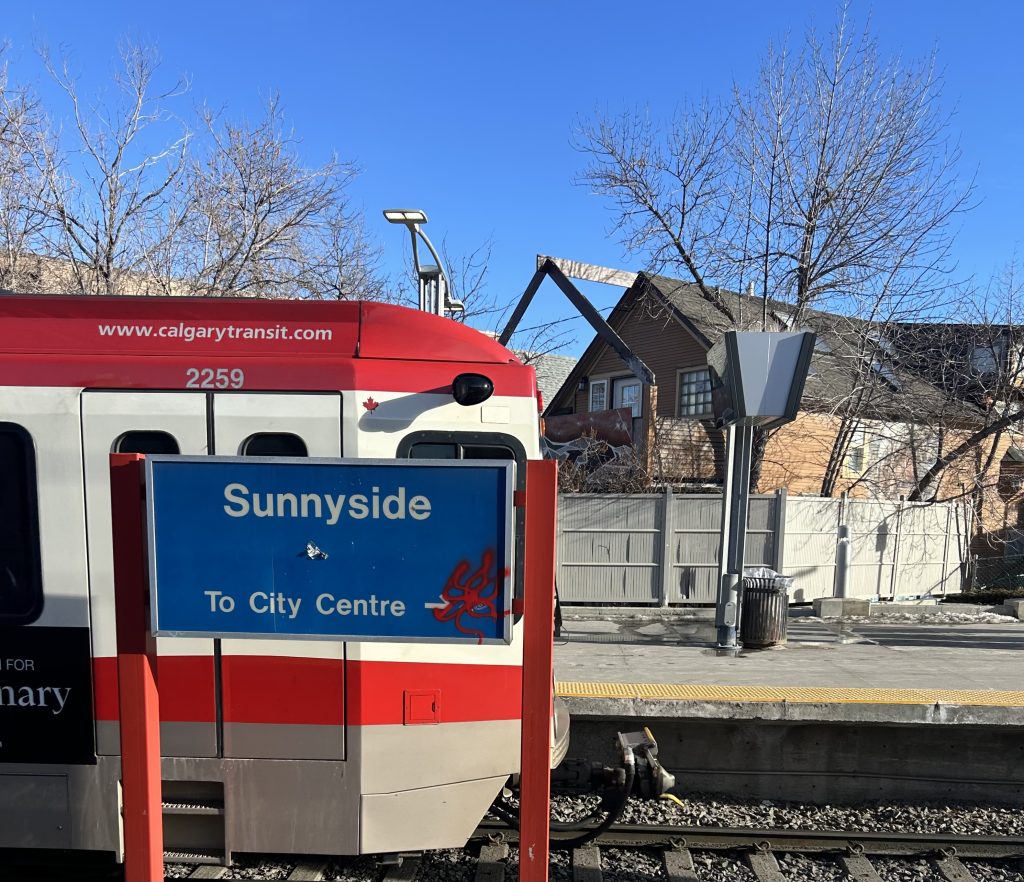
Image: A northbound train to Tuscany station on the C-Train’s Red line stops in front of the sign at Sunnyside station
While paying an increasing amount for public transportation might feel as though it’s in vain, especially for those who don’t think the quality correlates with the price, it’s a necessary part of public transportation services.
Riders who pay the fare are aiding funding for subsidies such as low cost transit passes and accessibility changes, improvements to service, as well as new technology for the transit systems. The revenue also goes to maintaining the current transportation vehicles, and paying the wages of the workers who operate them.
Different ways to pay
Calgary and Ottawa’s transit systems have a variety of ways to pay for tickets outside of receiving a transfer pass when you board a bus, though they are vastly different. Both cities have day and monthly passes, as well as U-Passes that are given to post-secondary students that are active throughout the duration of their semesters.
Ottawa uses PRESTO cards their main way of paying on OC Transpo, as they are reloadable and can have monthly passes connected to the card instead of having to obtain a new one. Riders can also add the PRESTO card to their phone’s digital wallets, which can also be connected to their card’s account. As of Sept. 7, 2023, riders in Ottawa can also tap their bank cards to pay for the fare, and the transit system changed the payment requirements in Aug. 2025 to have your payments on both PRESTO and your bank card stop once you cross the amount that a day-pass costs, which would be three 90-minute trips within one day.
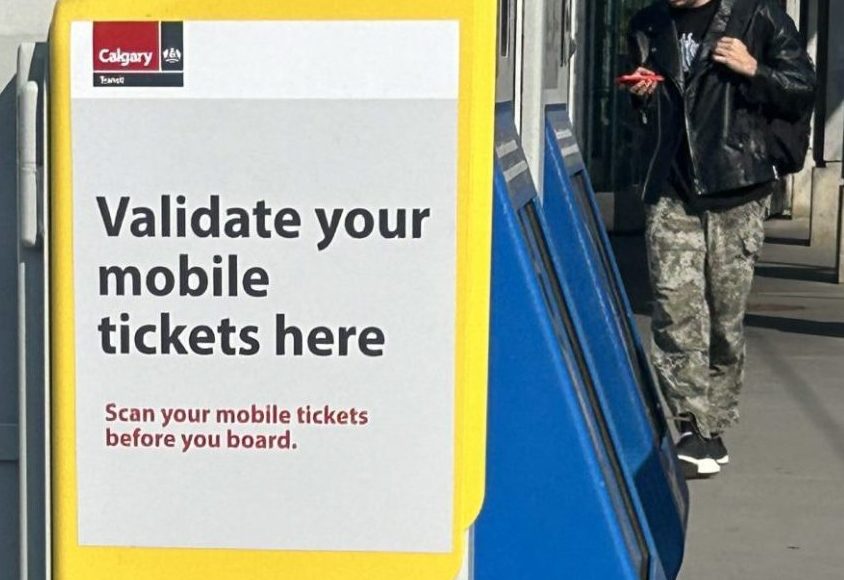
Calgary Transit has their own app called My Fare, which you can digitally purchase whatever transit passes you need, and also connect your school account to if you receive a U-Pass from your institution. You can also purchase tickets from the Transit app, where Calgary is one of the first cities they’re testing this function on. The train stations also have machines where you can purchase tickets before boarding, though you have to seek out a convenience store or grocery store that carry monthly passes if you want to purchase one in person.
Single fare tickets vs. Monthly passes
A single ticket on these two cities fares may cost $4 a ride, but they also carry monthly passes that one can obtain if they’re consistently riding on public transit. For those who don’t use public transit enough to fully justify the price of a full month’s pass, this can be frustrating as the costs do pile up over time.
“The monthly pass is absolutely a good deal. When it comes to to $4 per ride for 90 minutes, that seems a little excessive.”
Dwayne Wayne, a Calgary Transit rider.
Low cost transit passes
Both cities have acknowledge that riders who are lower income can’t always afford to pay the price for public transit passes, and that there may be dire consequences for them if they can’t get around, so they’re created services that are low cost as assistance.
Calgary has their low income monthly passes that one can apply for, which has three levels of payment depending on the individual’s level of income. They require you to be accepted into the Fare Entry program prior to purchasing one of the passes, which requires riders to fill out the forms and provide identification.
EquiPasses are Ottawa’s affordable transit pass, thought the price for their monthly pass is fixed at $58.25, which is half the cost of the regular version. You can also opt to fill your EquiPass for individual trips, which makes a 90-minute pass cost $1.75, which can be worthwhile to those who need the assistance without having to commit to a full month.
Means of fare evasion
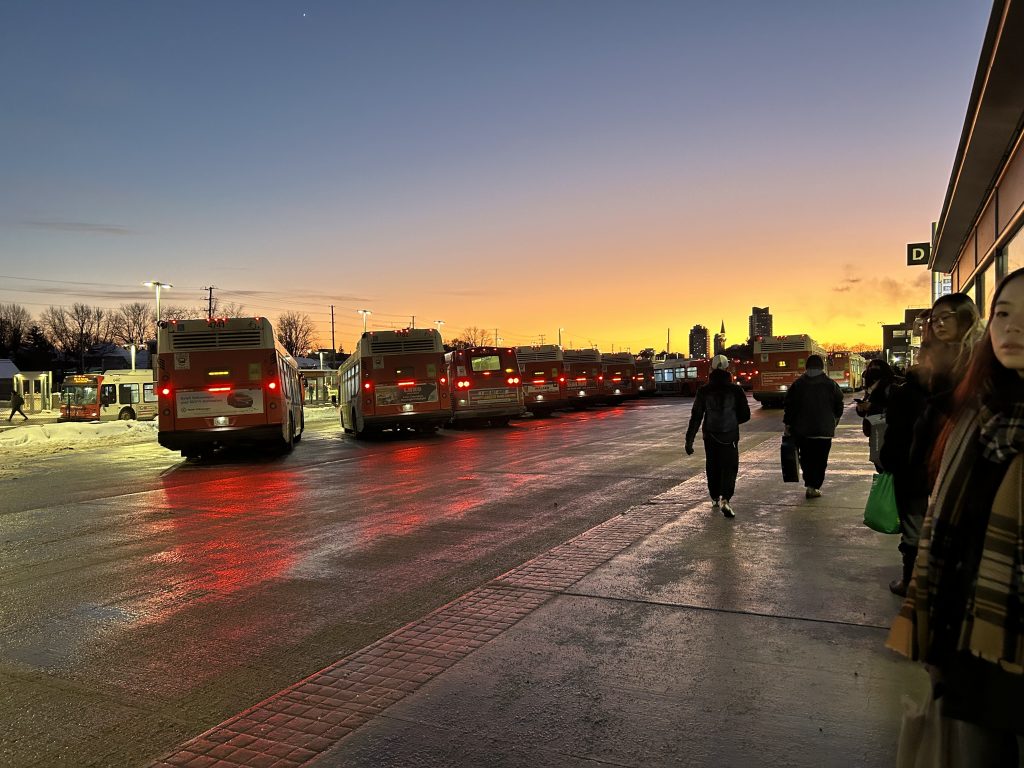
Image: Transit riders stand at Platform D at Tunney’s Pasture station in Ottawa, ON on Dec. 24, 2024
While the fare is $4, that doesn’t mean that people are always paying for their commutes. Everyday many people in both Calgary and Ottawa are evading the fare, though the means to do so are different in either city.
In June 2025 Calgary implemented their new means of verifying that riders are paying to use the C-Train, but without any barriers to stop people, or people leaving the TD Free Zone without first paying, there’s no formal way to stop each rider that’s fare evading. There are many who verify their passes due to the honour system, and those who buy monthly passes up front who don’t need to scan for their payment to be received, but the ease of walking onto a train platform leads to an increased amount of unpaid fares.
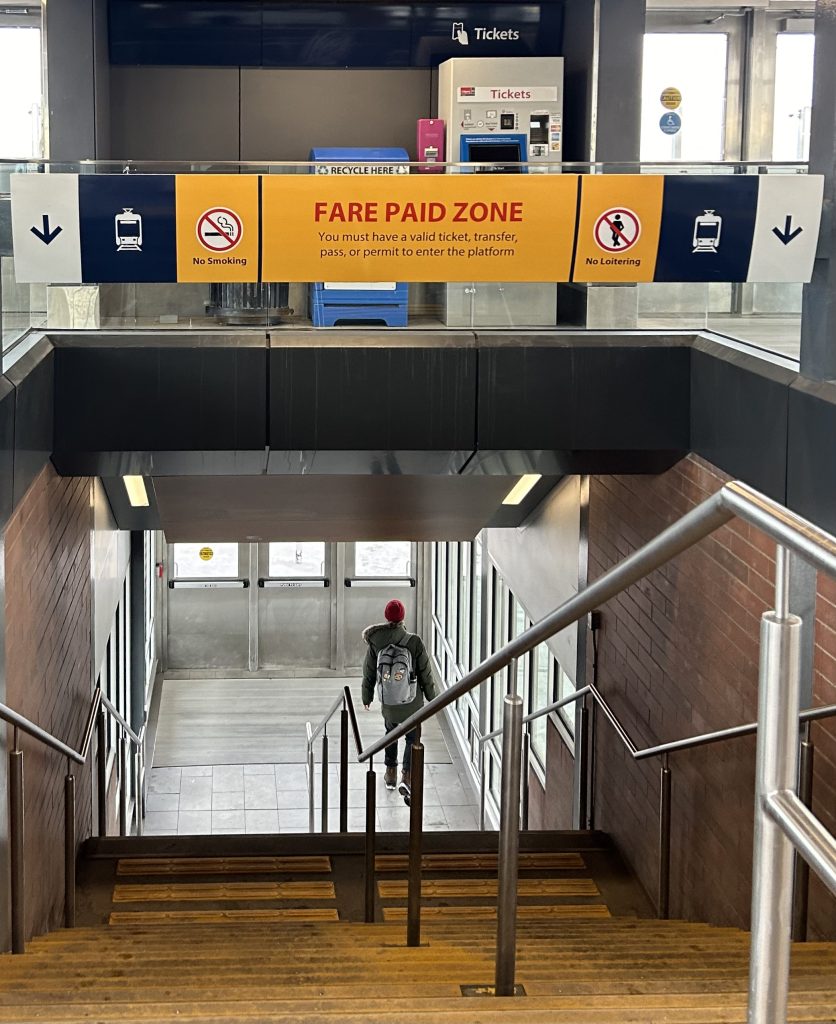
Nearly all O-Train stations, with the exception of stations such as Hurdman that are only accessible through a commute there on a train or bus, have gates that prevent riders from entering the train platforms without first paying. This doesn’t completely stop fare evasion, as people will share transit passes or walk behind one another to avoid paying, but it does stop those who wouldn’t go to extreme lengths to get a free ride.
Do riders think the fare is worth it?
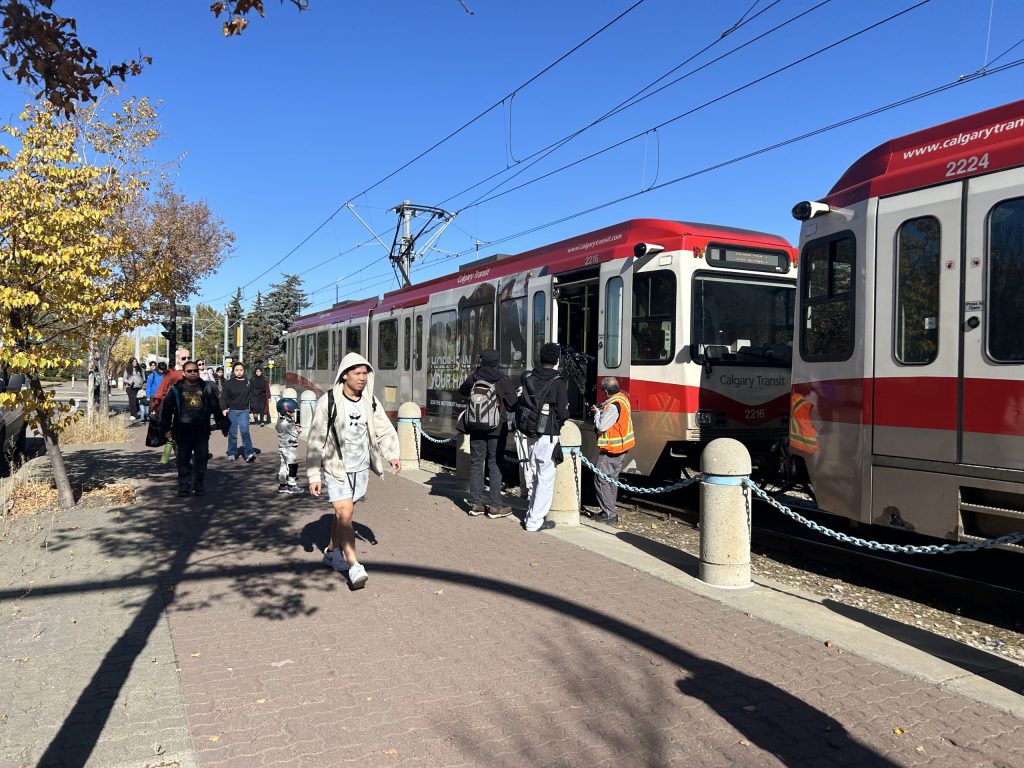
Image: Transit riders climb out of a southbound Red Line C-Train in between Sunnyside station and 8th Ave. station after the power to the train’s went down on Oct. 10, 2025.
Many riders will not opt to evade the fare, though paying for the ability to commute does not mean that they agree with the prices. If you search online forums such as Reddit, you’ll see many posts when new changes are announced or implemented discussing these changes, which many feel don’t reflect the quality of service they’re receiving.
“If you have a long day of going places, that could be $12,” said Angelina Squirrel, an OC Transpo rider. “And OC Transpo’s service is not even reliable at all.”
To combat this frustration, transit systems should focus on trying to inform riders as much as possible about the decisions that go behind the increases, and acknowledge the sentiments that riders have been expressing to build trust between them.
Featured Image: A sign on a OCTranspo bus, which is informing riders that the fare will increase starting Feb. 1, 2025 , and the prices that the fare will become once implemented.