Category: Features

  • Calgary Transit vs. OC Transpo: Why is the fare $4?

    Calgary Transit vs. OC Transpo: Why is the fare $4?

    Calgary and Ottawa have some of the highest public transportation fares in the country, with them both crossing the $4 threshold in the past year. Calgary Transit announced the increase to $4 for a 90-minute pass in Jan. 2026, and OC Transpo had implemented it a year prior, and bumped the fare up at the beginning of the year to $4.15.

    While many don’t choose to ride exclusively in 90-minute increments, it’s rare for the single fare to solely rise without an increase on alternative measures of time.

    How do transit agencies decide on fare prices?

    There are many factors that go into the decision to increase fare prices, though the final decision usually goes to councils and committees within the region’s transportation sector when they look over the year’s budget. On Nov. 24, 2025, Ottawa’s Transit Committee was going through actions they were planning to implement in the new year, such as free fare for youth under 18 on the weekends and increasing transfer times to 105 minutes from 3:00 p.m. – 6:00 p.m. on weekdays. The committee is tasked with finding ways to successfully implement these changes that benefit the riders and how much they’d cost per year, which leads to fare increases.

    While it can be frustrating to see that the fare rise year over year, it’s typically done to not shock riders by a sudden, sharp increase. “We know that increases can have an impact on customers,” said Amanda Bradley, Transit Relations for Calgary Transit. “So we generally make small increases each year to cover costs, rather than larger, less frequent ones.”

    What do fare prices go to?
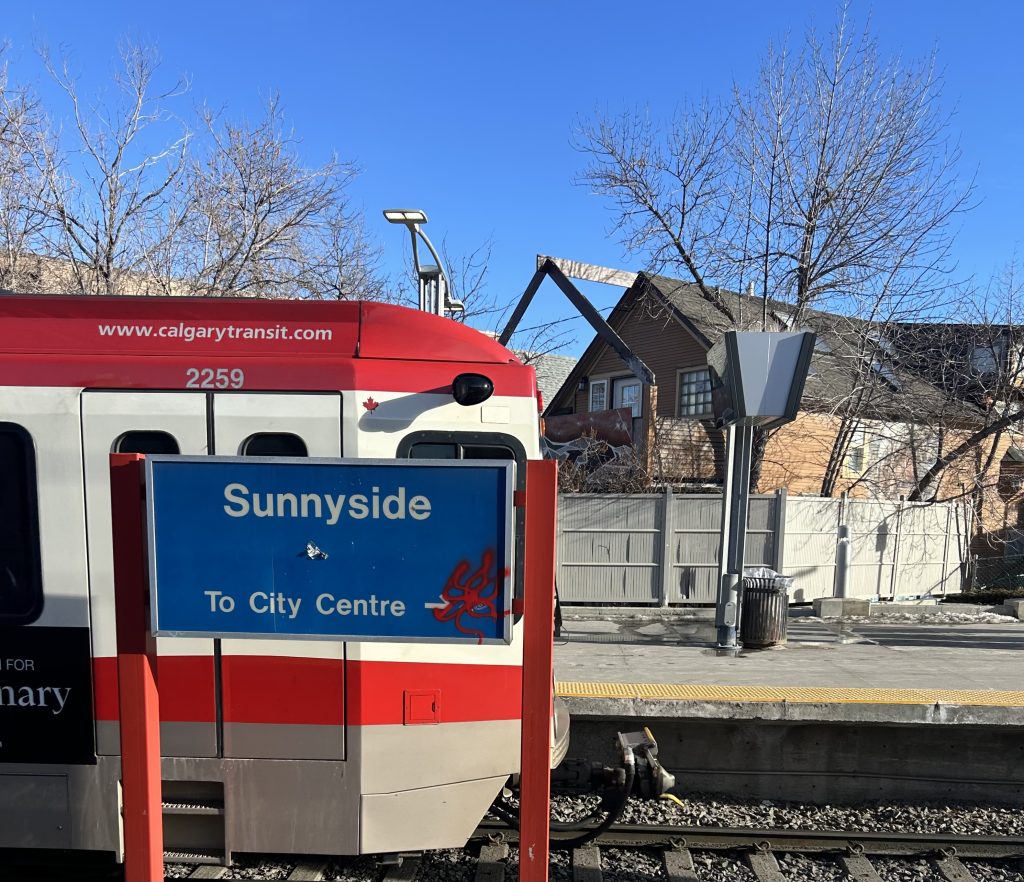
    Image: A northbound train to Tuscany station on the C-Train’s Red line stops in front of the sign at Sunnyside station

    While paying an increasing amount for public transportation might feel as though it’s in vain, especially for those who don’t think the quality correlates with the price, it’s a necessary part of public transportation services.

    Riders who pay the fare are aiding funding for subsidies such as low cost transit passes and accessibility changes, improvements to service, as well as new technology for the transit systems. The revenue also goes to maintaining the current transportation vehicles, and paying the wages of the workers who operate them.

    Different ways to pay

    Calgary and Ottawa’s transit systems have a variety of ways to pay for tickets outside of receiving a transfer pass when you board a bus, though they are vastly different. Both cities have day and monthly passes, as well as U-Passes that are given to post-secondary students that are active throughout the duration of their semesters.

    Ottawa uses PRESTO cards their main way of paying on OC Transpo, as they are reloadable and can have monthly passes connected to the card instead of having to obtain a new one. Riders can also add the PRESTO card to their phone’s digital wallets, which can also be connected to their card’s account. As of Sept. 7, 2023, riders in Ottawa can also tap their bank cards to pay for the fare, and the transit system changed the payment requirements in Aug. 2025 to have your payments on both PRESTO and your bank card stop once you cross the amount that a day-pass costs, which would be three 90-minute trips within one day.

    Calgary Transit has their own app called My Fare, which you can digitally purchase whatever transit passes you need, and also connect your school account to if you receive a U-Pass from your institution. You can also purchase tickets from the Transit app, where Calgary is one of the first cities they’re testing this function on. The train stations also have machines where you can purchase tickets before boarding, though you have to seek out a convenience store or grocery store that carry monthly passes if you want to purchase one in person.

    Single fare tickets vs. Monthly passes

    A single ticket on these two cities fares may cost $4 a ride, but they also carry monthly passes that one can obtain if they’re consistently riding on public transit. For those who don’t use public transit enough to fully justify the price of a full month’s pass, this can be frustrating as the costs do pile up over time.

    “The monthly pass is absolutely a good deal. When it comes to to $4 per ride for 90 minutes, that seems a little excessive.”

    Dwayne Wayne, a Calgary Transit rider.

    Low cost transit passes

    Both cities have acknowledge that riders who are lower income can’t always afford to pay the price for public transit passes, and that there may be dire consequences for them if they can’t get around, so they’re created services that are low cost as assistance.

    Calgary has their low income monthly passes that one can apply for, which has three levels of payment depending on the individual’s level of income. They require you to be accepted into the Fare Entry program prior to purchasing one of the passes, which requires riders to fill out the forms and provide identification.

    EquiPasses are Ottawa’s affordable transit pass, thought the price for their monthly pass is fixed at $58.25, which is half the cost of the regular version. You can also opt to fill your EquiPass for individual trips, which makes a 90-minute pass cost $1.75, which can be worthwhile to those who need the assistance without having to commit to a full month.
    Means of fare evasion

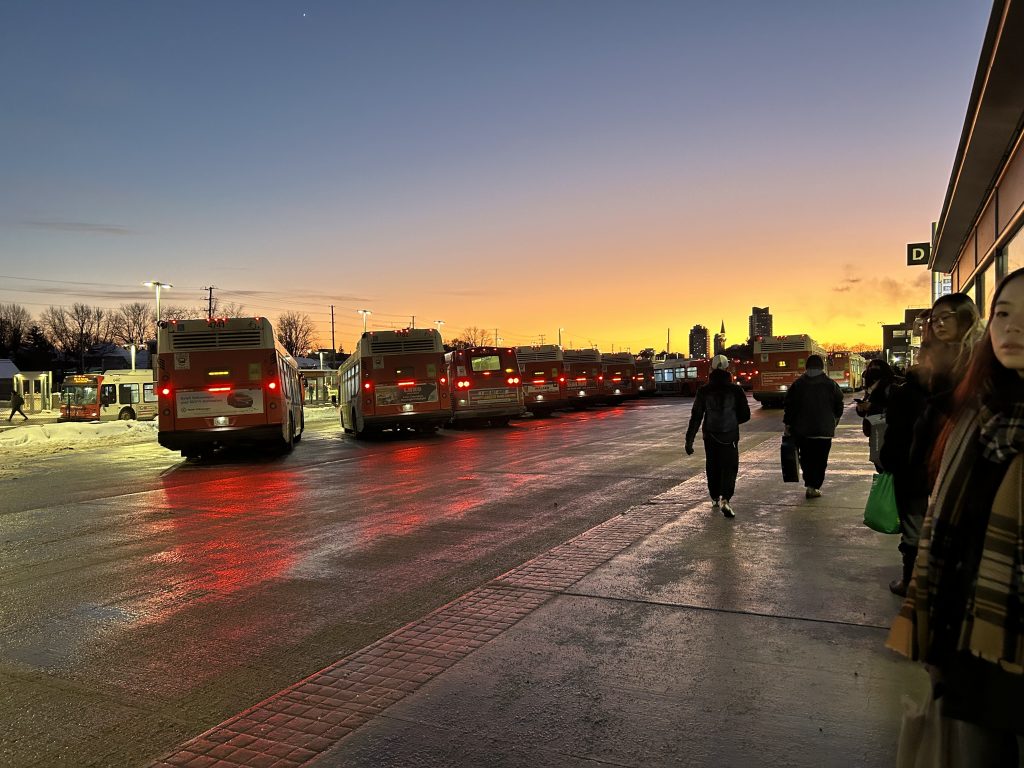
    Image: Transit riders stand at Platform D at Tunney’s Pasture station in Ottawa, ON on Dec. 24, 2024

    While the fare is $4, that doesn’t mean that people are always paying for their commutes. Everyday many people in both Calgary and Ottawa are evading the fare, though the means to do so are different in either city.

    In June 2025 Calgary implemented their new means of verifying that riders are paying to use the C-Train, but without any barriers to stop people, or people leaving the TD Free Zone without first paying, there’s no formal way to stop each rider that’s fare evading. There are many who verify their passes due to the honour system, and those who buy monthly passes up front who don’t need to scan for their payment to be received, but the ease of walking onto a train platform leads to an increased amount of unpaid fares.

    Nearly all O-Train stations, with the exception of stations such as Hurdman that are only accessible through a commute there on a train or bus, have gates that prevent riders from entering the train platforms without first paying. This doesn’t completely stop fare evasion, as people will share transit passes or walk behind one another to avoid paying, but it does stop those who wouldn’t go to extreme lengths to get a free ride.
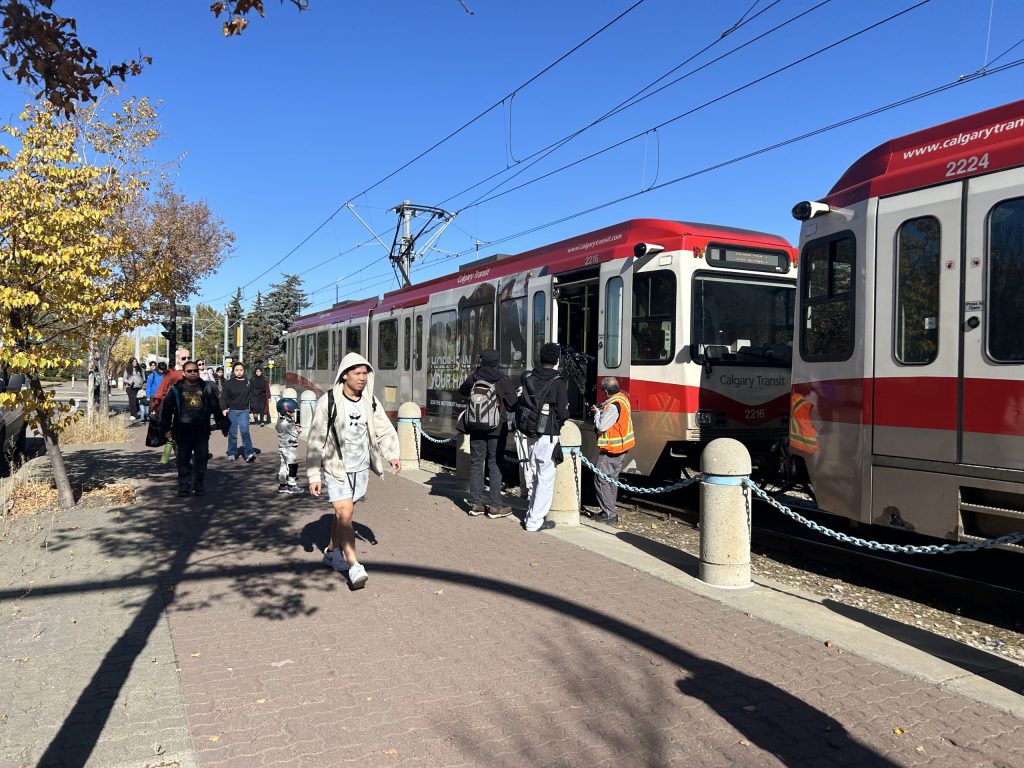
    Image: Transit riders climb out of a southbound Red Line C-Train in between Sunnyside station and 8th Ave. station after the power to the train’s went down on Oct. 10, 2025.

    Many riders will not opt to evade the fare, though paying for the ability to commute does not mean that they agree with the prices. If you search online forums such as Reddit, you’ll see many posts when new changes are announced or implemented discussing these changes, which many feel don’t reflect the quality of service they’re receiving.

    “If you have a long day of going places, that could be $12,” said Angelina Squirrel, an OC Transpo rider. “And OC Transpo’s service is not even reliable at all.”

    To combat this frustration, transit systems should focus on trying to inform riders as much as possible about the decisions that go behind the increases, and acknowledge the sentiments that riders have been expressing to build trust between them.

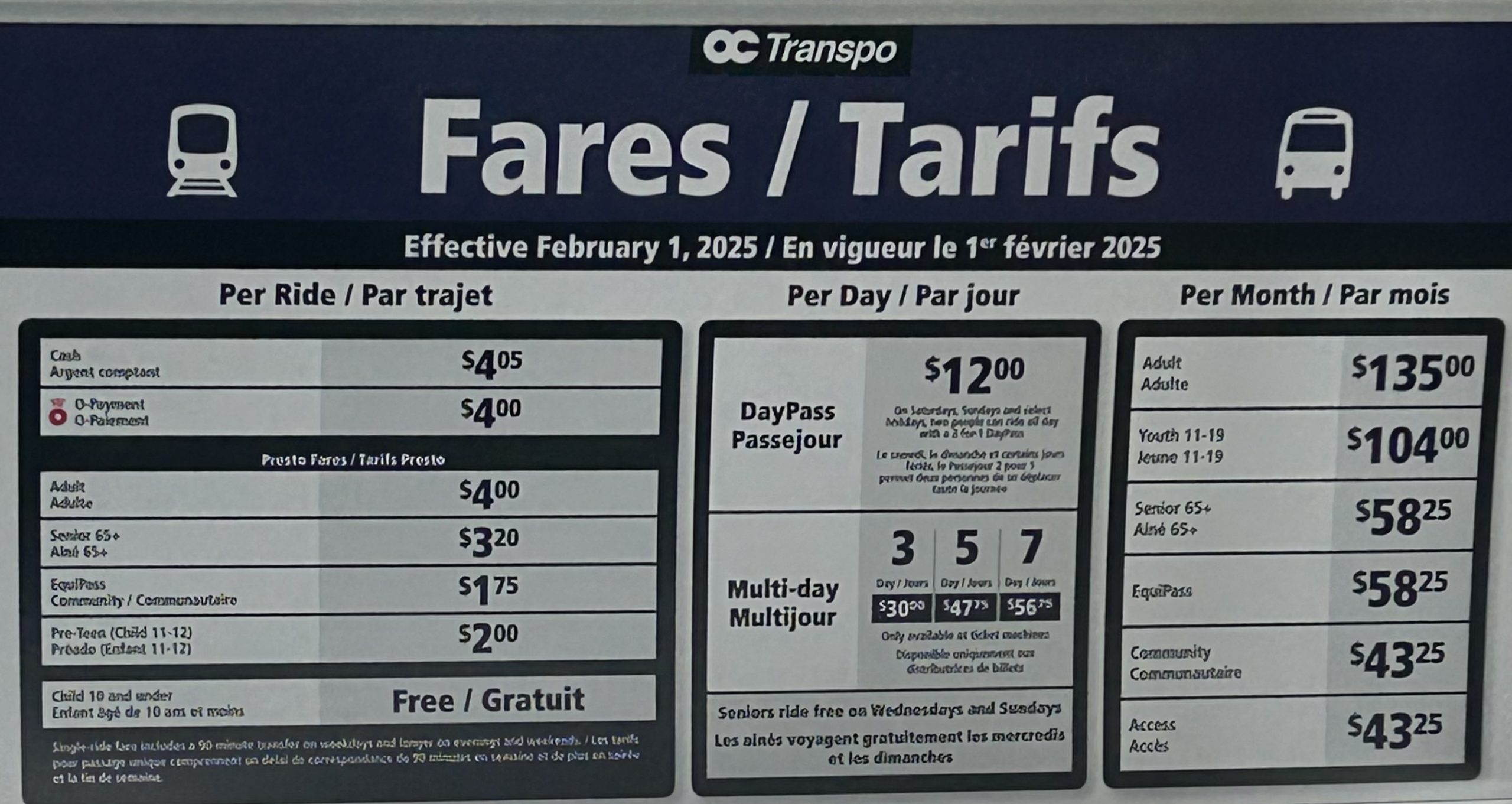
    Featured Image: A sign on a OCTranspo bus, which is informing riders that the fare will increase starting Feb. 1, 2025 , and the prices that the fare will become once implemented.
  • Three tips to improve your commuting experience in Calgary

    Three tips to improve your commuting experience in Calgary

    Commuting in a large city can be difficult, especially if you’re ill prepared for your journey. But with some research and planning beforehand, you too can consistently make it to your destination.

    Using transit trackers and applications

    There are many ways to check for your connecting bus or train outside of looking at a printed schedule or the screens at C-Train stations, especially with the technology we have now.

    For many, Google Maps or Calgary Transit’s website are sufficient enough for their needs, though they don’t show live updates on the bus a majority of the time. They’re best utilized to either plan trips, or to learn what the bus schedule is when you’re first starting to take a new bus route.

    The Transit app is a great tool to use for both transit schedules and real-time updates on the location of the vehicles, and there’s a wide range of regions the app supports, so you can download it once and be set regardless of where you travel. It shows major service updates in the app on the routes it’s affecting, and its real-time tracking is also aided by riders sharing their location while riding, so there’s an added layer of trust in the results that are shown throughout the day.

    Calgary is currently one of the cities the Transit app is testing out mobile ticket purchases on, so now riders can schedule their commute and have their tickets pre-purchased on the one application instead of downloading the cities specific app.

    While you can stick to using the Transit app and buying tickets as you go, if you want to have a digital monthly pass or a U-Pass, you’ll have to download the Calgary Transit My Fare app. It has it’s own benefits, it’s much easier to navigate it you’re solely interested in purchasing ticktes, and it links you to webpages regarding helpful services Calgary Transit provides.

    The city also has an app for their On Demand services, a new service to combat the lack of bus routes in newer communities in the city.

    “It’s kind of like Uber, but it’s basically a transit app,” says Kelly Mayze. “It’s run by Calgary Transit, and you use transfers and tickets to get one, and it’s basically where you order it.”

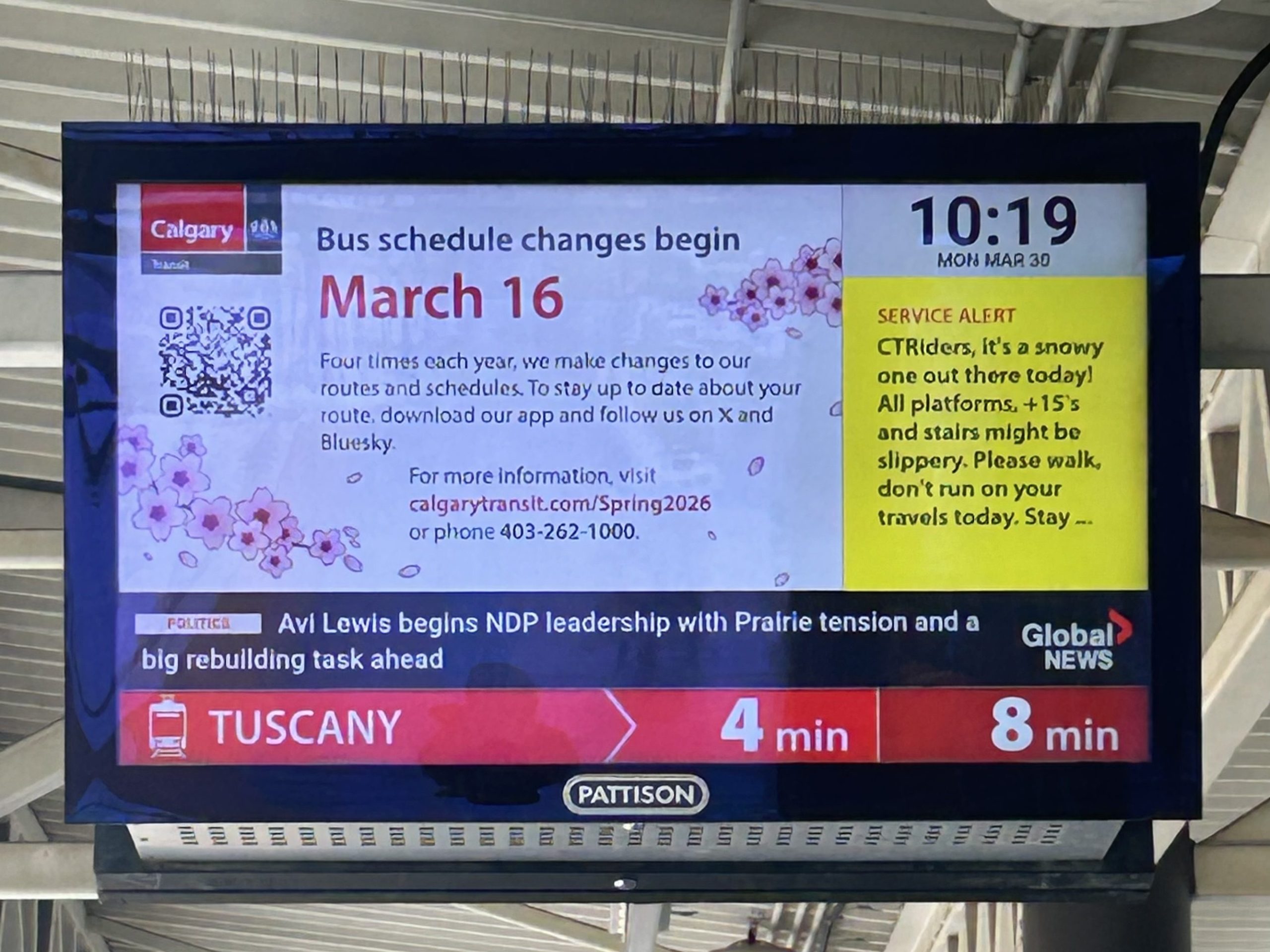
    Image: Signage at SAIT/AUArts/Jubilee Station showing a reminder about bus schedule changes that are in effect, weather related service delays, and when the next Tuscany train will arrive.

    Staying up to date with Calgary Transit and the City of Calgary

    Though Calgary Transit is good at promoting city wide changes, such as seasonal bus schedule changes and pre-planned closures, it never hurts to be prepared for the unexpected and to know where to look for information.

    “I do usually pay attention to the signs,” says Asher Hache. “Like, if a station’s out of order or something, kind of got to find a way around that.”

    The Calgary Transit website has a page dedicated to service changes, that are in effect , and you can read their specific updates by clicking on the route names. They also have their news posts, where they go more in-depth about new changes to both service and stations.

    For more urgent delays that happen along the C-Train lines, their X page tends to be up to date with what the nature of the issue is and an approximation of the delay’s impact on the average commute. Not long after these updates come out, the Transit app tends to have an alert on that train’s line with a similar message.

    Running

    Running for your connecting bus, while temporarily embarrassing, can be the difference between arriving on time to your destination and arriving a half hour late. While the trains run anywhere between every five to ten minutes at most stations on weekdays, busses and weekend schedules cut down service substantially, and the C-Train won’t hesitate to leave you.

    That being said, staying safe is more important than risking your health, so be mindful of both the weather and your surroundings to maintain your security. Don’t run onto a platform while the arm barrier is lowering, or run across traffic to a bus stop, it’s not worth it to risk your life. The train will come eventually, it only has two directions to go in.

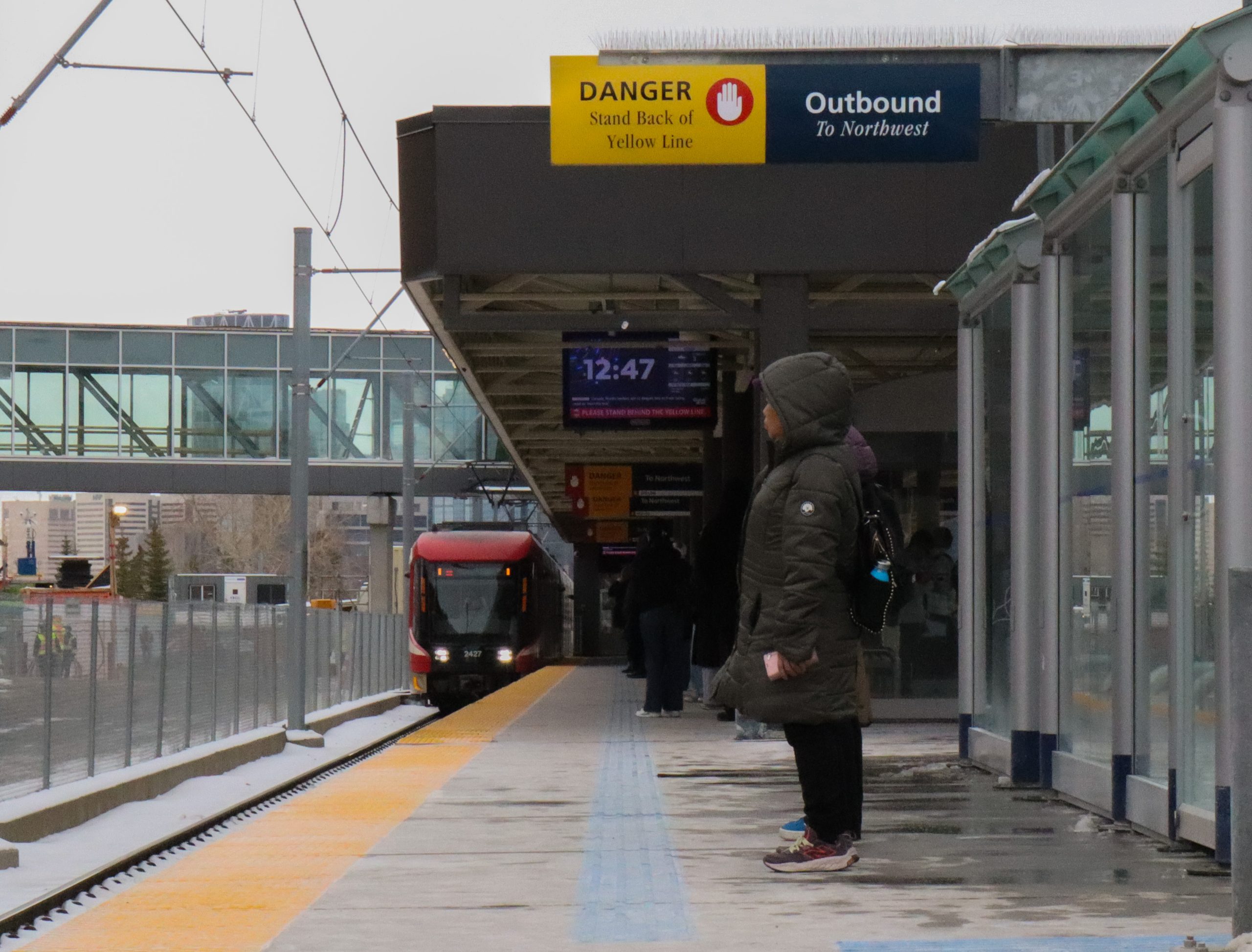
    Feature Image: People waiting for the train to Tuscany Station to arrive at SAIT/AUArts/Jubilee Station in Calgary on Monday, March 16, 2026.

  • U-Pass, We-Pass

    U-Pass, We-Pass

    When they’re running late to an 8:00 a.m. class, scanning their U-Passes is the last thing on student’s minds.

    Many post-secondary students take public transportation to get to school, yet you’ll see very few pay attention to the scanners or signage reminding riders that the fare is mandatory. There are those who ignore paying the fare at every station platform, but it seems to be status quo when going to and from school stations.

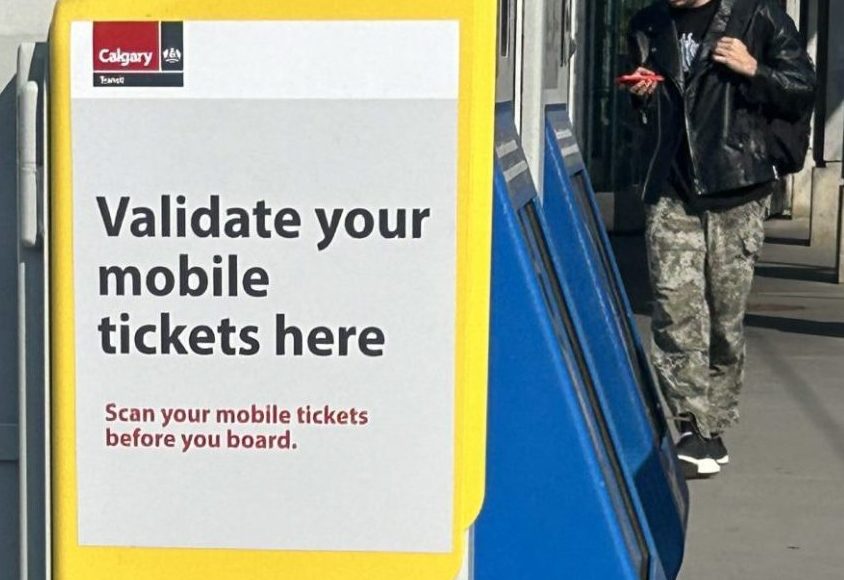
    Calgary Transit introduced a new method for verifying mobile tickets in June 2025, with scanners installed at the train station platforms across the city before boarding. This is in stark contrast to other cities across Canada, where riders have to validate their tickets before accessing the platform guarded by a gate. Since their implementation the fare has been raised to four dollars, one of the highest in the country, which is a contributing factor for many to forgo paying the fare, although not a primary concern for those with U-Passes during the school year.

    As of June 2025, the City of Calgary reports that there were 401,751 U-Pass holders who used Calgary Transit, with there being four main post-secondary institutions being along the C-Train’s Red Line. Due to U-Passes being a mandatory payment within student’s tuitions in Calgary, with students having to go out of their way to get rid of it, many students within the city are incentivized to use public transportation to get to class.

    “Everyone just walks past,” said Adden Mirza, a student at the Southern Albertan Institute of Technology. “I never see people do it.”

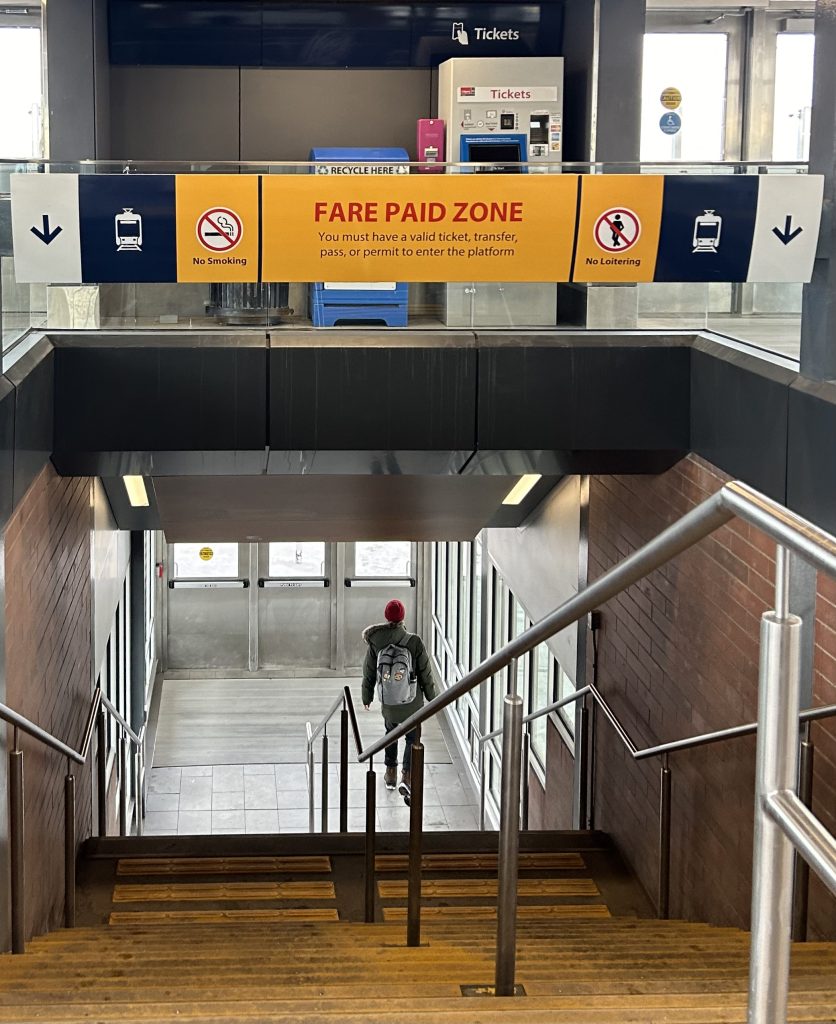
    A man walks down the stairs at University Station along the Red Line of the C-Train in Calgary on Monday, March 9, 2026. The signage that hangs above the stairs is a reminder about paying the fare, with many machines to purchase and verify tickets surrounding the upper platform.

    Image: A man walks down the stairs at University Station along the Red Line of the C-Train in Calgary on Monday, March 9, 2026. The signage that hangs above the stairs is a reminder about paying the fare, with many machines to purchase and verify tickets surrounding the upper platform.

    While children under 12 are allowed to ride without paying, fare enforcement is not prevalent for most riders. According to a brief held February 10, Transit Peace Officers didn’t issue any tickets to those who failed to provide proof of age when riding Calgary Transit, with them saying that the funding they’d need to manually review the increasing amount of tickets would exceed $4000.

    “I feel like a lot of us are kind of us are kind of apathetic about it, especially because it’s just kind of a permanent pass, like per the semester,” said Lilac Herzog, a student at the University of Calgary. “So what is scanning it really accomplish? I think that’s kind of the mindset.”

    There are many factors that can contribute to students ignoring the scanners at stations, including the recency of this change for students who follow the traditional semester patterns. This new method is three months shy of being in effect for a year, and there’s room for both commuters and Calgary Transit to improve the ridership verification rates.

    Calgary Transit doesn’t currently have the information regarding the consistency of U-Passes being scanned, they have stated in the past that. For now, Calgary Transit says that students can choose if they scan their pass when transferring after that initial scan when first boarding. Whether they review the efficacy of scanners at certain stations is a future project for the city, though for now they may continue to sit untouched despite the crowded platforms.

    Featured Image: A Calgary Transit ticket scanner at Somerset-Bridlewood station.